Table of Contents
Switching to moulded fibre packaging starts with three practical questions: will it protect your product, what will it cost, and how can you be confident it will work? For businesses replacing expanded polystyrene (EPS), the decision should bring together material suitability, packaging design, performance testing and the complete cost of supply.
This guide explains what to consider when assessing moulded fibre as an alternative to EPS, and how to build a clear brief for your packaging supplier.
Can moulded fibre replace polystyrene packaging?
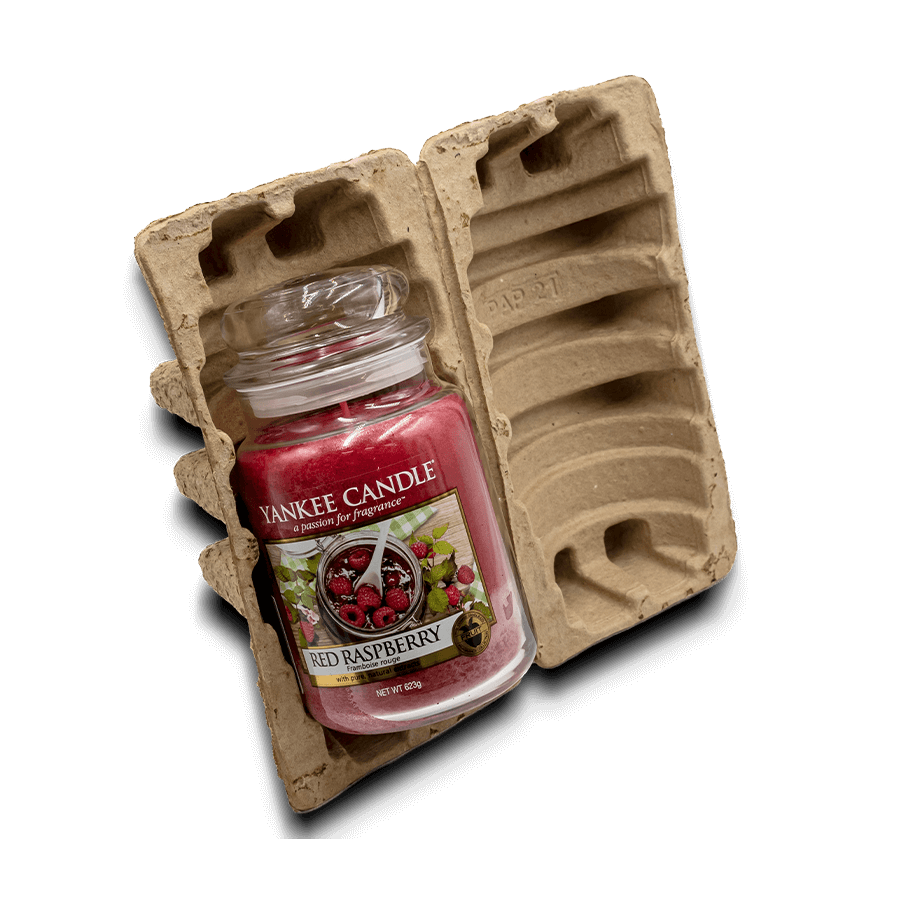
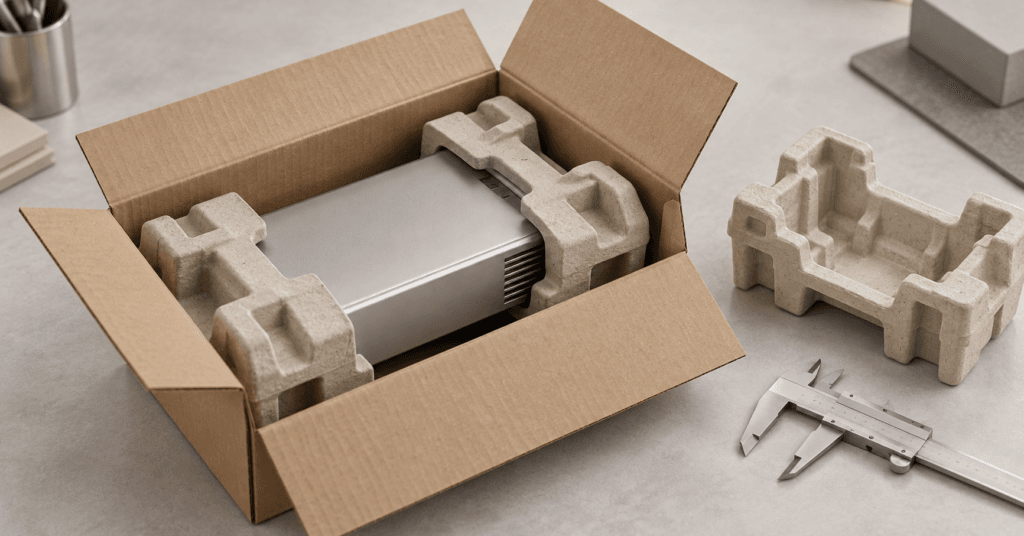
Moulded fibre is worth assessing for protective inserts, supports and separators. Suitability depends on the product and the conditions it will encounter throughout its journey.
Start by identifying exactly what your current polystyrene component does. Does it hold an appliance securely inside a carton? Protect a vulnerable corner? Keep accessories away from a finished surface? Or provide temperature control?
These functions require different assessments. Replacing a protective insert does not establish that the same material can replace an insulated shipping container.
Build your brief around the job the packaging must perform. Include photographs of the existing pack, identify vulnerable areas and explain any recurring damage. Ask your supplier which requirements moulded fibre could meet and which need further investigation.
For more context on material selection, explore our guide to plastic packaging alternatives.
How much does custom moulded fibre packaging cost?
Custom packaging needs a project-specific quotation. For a useful comparison, ask suppliers to separate development costs from the price of ongoing supply and explain the assumptions behind each figure.
Your quotation should address:
- Design and tooling: What is included in the initial development work, and how would later changes be charged?
- Order quantities: What minimum quantities apply, and how does pricing change at your expected volumes?
- Product specification: How do dimensions, material requirements and surface finish affect the proposed price?
- Prototypes and validation: Which samples, trials and tests are included?
- Delivery and supply: What are the delivery terms, order lead times and stockholding arrangements?
Provide realistic forecasts. A quotation based on one large annual order may not reflect the cost of smaller deliveries throughout the year.
Compare the complete cost of using the packaging
Build a comparison that includes the insert, outer carton, additional packing materials, packing labour, storage and delivery. Record any changes to pack dimensions and the number of packed products per pallet.
Include damage and returns using your own records. Treat projected improvements as assumptions until trials provide evidence.
A practical comparison is the cost of packaging and delivering a saleable product. This gives purchasing, operations and quality teams a shared basis for evaluating the change.
How should protective packaging be tested?
Assess the complete packed product, including the insert, carton, closures and accessories. Agree the test approach and acceptance criteria before testing begins.
Depending on the distribution route, an appropriate programme may include:
- Drop or shock testing, to assess protection against handling impacts.
- Vibration testing, to assess the effects of movement during transport.
- Compression testing, to assess performance under relevant stacking loads.
- Temperature and humidity conditioning, where environmental exposure matters.
The International Safe Transit Association (ISTA) publishes procedures for different packaged products and distribution scenarios. Select the appropriate procedure with your supplier or testing laboratory; one test programme will not suit every shipment.
Define success in terms of your product. That might include continued operation, acceptable cosmetic condition and accessories remaining secure. A carton that looks intact is not sufficient evidence that its contents meet your requirements.
Ask for a report identifying the tested packaging specification, conditions and results. If the design changes, agree what needs to be reassessed.
Will it work on your packing line?
Transport testing is one part of the decision. Plan a packing trial with the people who will use the packaging every day.
Observe how operators pick up the inserts, position the product, add accessories and close the carton. Measure packing time and record errors or awkward handling steps. Where machinery is involved, assess compatibility under representative operating conditions.
Check how incoming packaging will be stored and handled, too. Confirm storage guidance with the supplier and trial the arrangement you expect to use in production.
Use these findings to refine the design before committing to a wider rollout.
What about recycling and environmental claims?
Request information for the proposed specification, including fibre content, coatings or additives and the intended disposal route. Check that disposal instructions are appropriate for the markets where the packaging will be used.
Environmental comparisons also need a defined scope. Before claiming a reduction in impact, establish what has been compared and what evidence supports the result. Material choice, packaging quantity, transport and product protection should all inform the assessment.
Start with a clear packaging brief
Bring together your product dimensions and weight, current packaging, expected volumes, distribution route, protection requirements and target launch date. Share what works today and what you want to improve.
At OMNI-PAC GROUP, we develop custom moulded fibre packaging around individual product requirements. Our team can discuss your application and help assess whether moulded fibre is a suitable option.
Considering a move away from polystyrene? Send your current packaging details, product information and expected quantities to sales@omnipacgroup.com, or call 01724 847 207 to discuss your project.
Can moulded fibre packaging replace polystyrene?
Moulded fibre can replace selected polystyrene inserts and protective components where the design meets the product’s requirements. Suitability should be assessed through testing and packing trials, considering handling, transport and environmental exposure.
How much does custom moulded fibre packaging cost?
Pricing depends on the specification, design and tooling, order quantities, finishing requirements and delivery arrangements. A useful quotation separates initial development costs from ongoing supply and identifies what is included in sampling and testing.
How is moulded fibre packaging tested?
The complete packed product may undergo drop or shock, vibration and compression testing, with environmental conditioning where relevant. The programme should reflect the distribution route and use agreed acceptance criteria for the product and packaging.
Is moulded fibre packaging recyclable?
Recyclability depends on the complete specification, including coatings or additives, contamination and the collection systems available where the packaging is used. Ask your supplier for product-specific information and appropriate disposal guidance.