Table of Contents
According to a market forecast published by Arizton, the global sustainable packaging market is projected to grow from $319.62 billion in 2023 to $491.75 billion by 2029. Market forecasts should be treated as estimates, but the research indicates the commercial attention being given to packaging materials, recyclability and resource efficiency.
Reducing plastic packaging is now a commercial, regulatory and technical priority for businesses across many industries. However, effective plastic reduction involves more than replacing one material with another.
Packaging must still protect the product, meet hygiene and safety requirements, operate efficiently on packing lines and perform throughout transportation and storage. A material change that increases product damage or creates a less practical end-of-life route may not deliver the intended improvement.
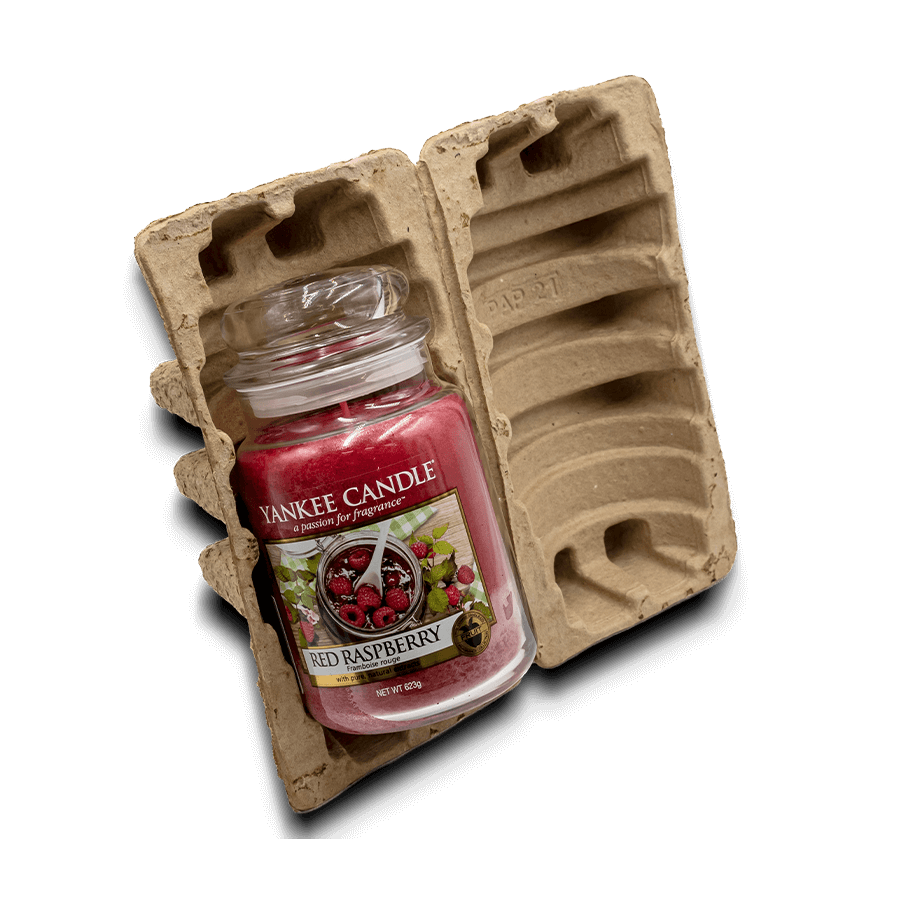
Moulded fibre can provide a practical alternative to selected plastic packaging components. It can be formed into protective trays, inserts, dividers, horticultural products, fresh produce packaging and other three-dimensional formats using recovered paper and cardboard or carefully selected virgin fibres.
The key question is not whether moulded fibre can replace all plastic packaging. It is where fibre-based packaging can provide the required performance while supporting more efficient material use and an appropriate recovery route.
Can moulded fibre replace plastic packaging?
Moulded fibre can replace selected plastic packaging components where it provides the required protection, hygiene, strength and manufacturing performance. Suitability depends on the product, supply chain, material composition and available end-of-life infrastructure, so each application should be assessed individually.
How UK Packaging Regulation Has Changed
Packaging regulation across the UK is placing greater emphasis on material use, recyclability, producer responsibility and waste-management costs.
In February 2025, the Office for the Internal Market published the final report from its study of single-use plastic restrictions across the United Kingdom. It found that the overall effects of regulatory differences on trade within the UK internal market had so far been modest, partly because restrictions introduced across the four nations had generally remained broadly aligned.
The report also found that businesses strongly preferred greater alignment in the scope and timing of regulations. Larger companies were often moving beyond minimum regulatory requirements because of corporate packaging commitments and customer expectations.
Since the original article was published, extended producer responsibility for packaging has also become operational. Obligated businesses may be responsible for reporting packaging data and contributing to the costs of managing packaging waste.
Recyclability is increasingly relevant because EPR disposal fees are being modulated according to packaging recyclability. This strengthens the commercial case for businesses to understand the composition and end-of-life performance of the packaging they place on the market.
Plastic Packaging Tax also applies to qualifying finished plastic packaging components containing less than 30% recycled plastic. Together, these measures mean packaging design decisions can affect compliance, reporting and cost as well as brand and environmental objectives.
Where Can Moulded Fibre Replace Plastic?
Moulded fibre is not a universal replacement for plastic, but it can provide an effective alternative in applications requiring three-dimensional protection, separation, cushioning, ventilation or product presentation.
Potential applications include:
- Protective inserts for electronics and consumer products
- Fresh produce trays
- Horticultural plant trays and pots
- Medical pulp products
- Protective packaging for industrial components
- Bottle and container dividers
- Transit packaging for fragile products
- Fibre-based protection for accessories such as UK 3-pin plugs
The material can be designed around a product’s dimensions and performance requirements. Mould geometry, wall thickness, ribs, cavities and other structural features can be developed to provide support and protection.
After-pressing can also be used to create a smoother, more defined surface suitable for premium consumer products and applications where presentation is important.
What Are the Benefits of Moulded Fibre Packaging?
Use of Recovered Fibre
Many moulded fibre products can be manufactured using recovered paper and cardboard, giving those materials a further productive use. Selected virgin fibres may still be required for particular hygiene, strength, appearance or technical requirements.
Three-Dimensional Protection
Moulded fibre can be formed around the shape of a product, creating cavities, ribs and supporting structures that help protect it during handling and transportation.
Efficient Nesting
Many moulded fibre products can be nested, helping reduce storage and transport space before they are used.
Range of Surface Finishes
Conventional moulding can provide a practical textured surface, while after-pressing can create a smoother and more refined finish.
Fibre-Based Recovery Options
Clean fibre packaging may be suitable for appropriate paper and cardboard recycling systems, depending on its composition, coatings, contamination and local collection infrastructure.
Custom Development
Tooling and product geometry can be developed around individual customer requirements, allowing moulded fibre to be assessed for a wide range of protective applications.
When Might Plastic Still Be Required?
Moulded fibre is not automatically suitable for every packaging application. Plastic may still be required where a product needs:
- A completely transparent package
- A very high or long-duration moisture barrier
- Sterile barrier performance
- Resistance to oils or particular chemicals
- Extremely thin or flexible structures
- Repeated washing or reuse
- Specific food-contact or medical performance
- Compatibility with existing high-speed equipment
Coatings or barriers can extend the performance of fibre packaging, but they may also affect recyclability or the appropriate disposal route. These factors should be assessed during product development.
Responsible material substitution means choosing the most appropriate packaging system for the application rather than assuming that one material is always preferable.
How OMNI-PAC Develops Plastic Packaging Alternatives
OMNI-PAC GROUP designs and manufactures moulded fibre packaging for medical care, fresh produce, horticulture and custom protective applications.
Our teams work with customers to understand:
- Product dimensions and weight
- Fragility and protection requirements
- Hygiene and moisture requirements
- Packing-line processes
- Expected order volumes
- Transportation and storage conditions
- Presentation and branding requirements
- Material composition
- Intended end-of-life route
Depending on the project, we can support design, material selection, tooling, prototyping, testing and preparation for commercial production.
OMNI-PAC’s European manufacturing network brings together expertise across the United Kingdom, France and Germany. This gives the Group experience in a range of product categories, manufacturing technologies and customer markets.
From Material Substitution to Packaging Performance
Replacing a plastic component is only successful when the alternative performs throughout manufacture, packing, storage, transportation and customer use.
OMNI-PAC’s role is to help customers determine whether moulded fibre can provide the necessary protection and operational performance for a particular application. That assessment may consider material choice, geometry, tooling, surface finish, nesting, transport efficiency and end-of-life requirements.
The result must be practical at commercial scale. Environmental objectives cannot be separated from quality, consistency, cost and manufacturing efficiency.
James Gallacher, Managing Director of OMNI-PAC GROUP UK, said: “Businesses are looking much more closely at every component within their packaging systems. They want to reduce plastic, but they also need confidence that an alternative will protect the product and work within established manufacturing and supply-chain processes.
“Moulded fibre can provide a practical solution in many applications, but the decision must be based on evidence. Material composition, performance testing, packing efficiency and the intended recovery route all need to be considered.
“Our role is to work with customers from the initial packaging brief through design, tooling and commercial manufacture, helping them identify where moulded fibre can deliver the required performance at scale.”
What Should Businesses Assess Before Switching Materials?
Before replacing a plastic packaging component, businesses should ask:
- What function does the existing component perform?
- What protection level is required?
- Is the alternative compatible with the product?
- Has it been tested under realistic distribution conditions?
- Can it run efficiently through the packing process?
- Does it change pack dimensions or pallet efficiency?
- What is its verified material composition?
- Does it contain coatings or additives?
- Is the recycled content documented?
- Is the intended recovery route available?
- Are disposal instructions clear?
- How will the change affect reporting and EPR obligations?
- Is any environmental comparison supported by evidence?
A successful change should be assessed across the complete packaging lifecycle rather than judged only by the material used.
FAQs
What are the main alternatives to plastic packaging?
Alternatives may include moulded fibre, corrugated cardboard, solid board, reusable packaging systems and other fibre-based formats. The most appropriate option depends on the product, required protection, supply chain and end-of-life infrastructure.
Can moulded fibre replace plastic packaging?
Moulded fibre can replace selected plastic components where it provides the required structural, protective, hygiene and manufacturing performance. Each application should be tested individually.
What is moulded fibre packaging made from?
Moulded fibre packaging can be manufactured using recovered paper and cardboard or selected virgin fibres. The composition depends on the product’s performance, hygiene, appearance and regulatory requirements.
Is moulded fibre packaging recyclable?
Many clean moulded fibre products may be suitable for paper and cardboard recycling. Actual recyclability depends on material composition, coatings, contamination and local recycling infrastructure.
Is moulded fibre packaging compostable?
Selected moulded fibre products may be compostable under specified conditions. Compostability should be confirmed through the relevant product specification, test evidence and available collection system.
Does replacing plastic always reduce environmental impact?
Not necessarily. The alternative must still protect the product and operate efficiently. A complete comparison may need to consider raw materials, manufacturing, transportation, product damage and end-of-life management.
Can OMNI-PAC develop custom plastic packaging alternatives?
Yes. OMNI-PAC develops custom moulded fibre packaging around product dimensions, protection, manufacturing, presentation and supply-chain requirements.
If your business is reviewing a plastic packaging component, OMNI-PAC GROUP can help assess whether moulded fibre is technically and commercially suitable.
Tell us about your product, existing packaging, protection requirements, expected volumes and intended markets. Our team can review the application and discuss established products or a custom moulded fibre solution.