Table of Contents
The OMNI-PAC GROUP UK Managing Director, James Gallacher, discusses moulded fibre innovation, customer priorities, circularity and the future of packaging
Demand for packaging that uses materials more efficiently, incorporates recovered content and supports established recovery systems continues to influence product development, procurement and regulation.
The global sustainable packaging market was valued at an estimated $319.62 billion in 2023 and is forecast to reach $491.75 billion by 2029, representing a compound annual growth rate of 7.44%, according to research published by Arizton. While market forecasts should be treated as estimates rather than guaranteed outcomes, they demonstrate the commercial attention being given to packaging sustainability.
At OMNI-PAC GROUP UK, these changes are visible in customer conversations across medical care, fresh produce, horticulture and custom protective packaging. Customers increasingly want to understand material composition, recycled content, product performance, recyclability and how packaging choices may be affected by changing regulations.
In this interview, James Gallacher, Managing Director of OMNI-PAC GROUP UK, discusses the sustainable packaging trends influencing the sector and explains how OMNI-PAC works with customers to develop practical moulded fibre packaging solutions.
In this interview, James shares his perspective on sustainability and emerging trends in the industry.
What sustainable packaging trends are shaping the market?
Key sustainable packaging trends include greater use of verified recycled content, efforts to reduce unnecessary packaging, improved recyclability, plastic substitution where technically appropriate, more efficient material use and greater scrutiny of environmental claims. Packaging EPR regulations are also increasing the importance of design and end-of-life performance.
What Does Sustainability Mean to OMNI-PAC GROUP?
For OMNI-PAC GROUP, sustainability means continually working to use materials and resources more efficiently while manufacturing packaging that performs its required function.
Recovered paper and cardboard are important raw materials across many of our moulded fibre products. By transforming recovered fibre into new packaging, we can keep valuable materials in productive use and reduce reliance on conventional plastic in applications where moulded fibre provides a technically suitable alternative.
Sustainability also requires us to look beyond the raw material. We need to consider product design, manufacturing efficiency, water and energy use, transportation, product protection and appropriate end-of-life recovery.
Not every product has the same composition or disposal route, so environmental claims must be assessed against the relevant product specification and the recycling infrastructure available in its intended market.
OMNI-PAC GROUP UK manufactures approximately 500 million moulded fibre products annually and uses around 7,000 tonnes of recovered paper and cardboard across its UK operations.
Across the wider OMNI-PAC GROUP operations in France, Germany and the United Kingdom, more than 100,000 tonnes of paper and cardboard are processed annually.
Which Sustainable Packaging Trends Are You Seeing?
We are seeing customers place greater emphasis on the complete packaging lifecycle. They want to know where materials come from, how efficiently the packaging performs, whether it can reduce the use of conventional plastic and what should happen to it after use.
Moulded fibre is receiving increased attention because it can be produced using recovered or responsibly sourced fibre and formed into three-dimensional packaging for a wide variety of applications.
However, the conversation is becoming more detailed. Customers no longer want broad claims alone. They increasingly need verified recycled-content information, clear material specifications, relevant test data and market-specific disposal guidance.
We are also seeing more interest in refined surface finishes, branding, colour and precision. Packaging still needs to protect the product, work efficiently through the supply chain and present the brand appropriately. Environmental objectives cannot be considered separately from these practical requirements.
How Do You Develop Packaging with Customers?
We begin by understanding the complete application. That includes the product’s dimensions, weight and fragility, the protection it requires, expected volumes, packing processes, distribution conditions and intended end-of-life route.
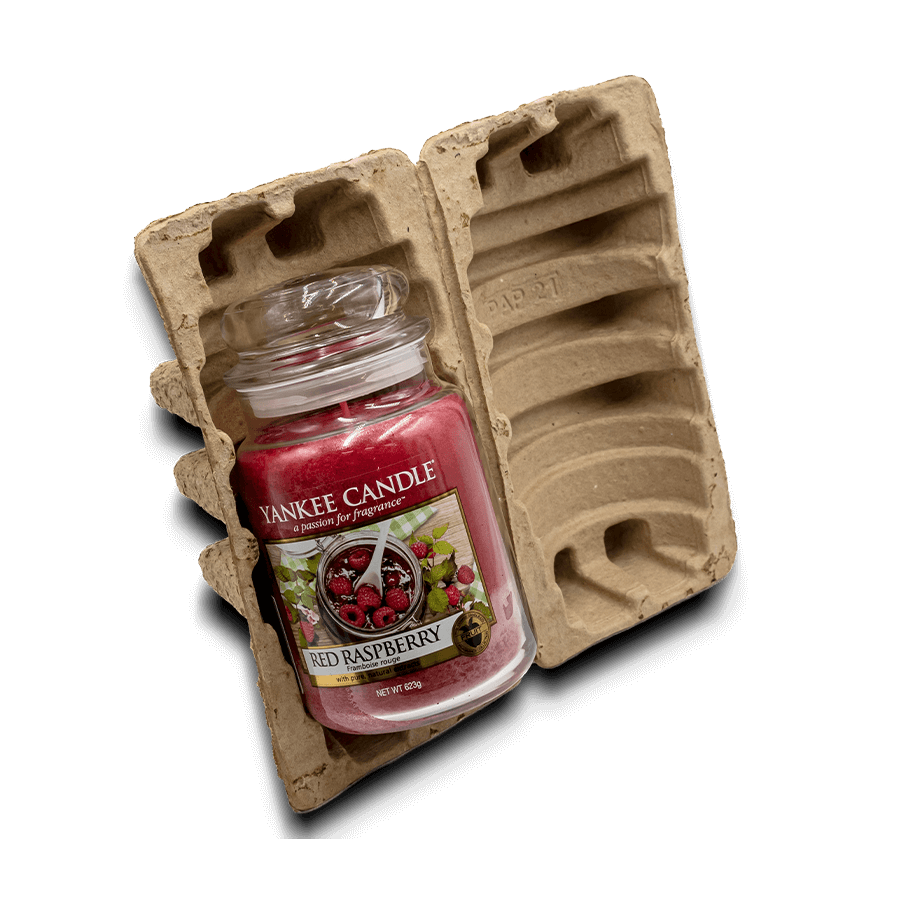
Our teams can then assess whether an existing product is suitable or whether a custom moulded fibre solution should be developed. For custom projects, this may include design, material selection, tooling, prototyping, testing and preparation for commercial manufacture.
After-pressing allows us to produce moulded fibre packaging with a smoother, more defined surface. Depending on the application, customers may also be able to select different shapes, colours and structural features.
Our objective is to develop packaging that meets the agreed technical and commercial requirements while considering material efficiency and appropriate recovery options.
How Are Companies Reducing Single-Use Plastic?
Companies are beginning by identifying where plastic is used within their packaging systems and determining whether each component is necessary. In some cases, material use can be reduced. In others, a reusable solution or a fibre-based alternative may be technically appropriate.
Moulded fibre can replace selected plastic packaging components in applications requiring cushioning, separation, structural support or product presentation. It is already used in fresh produce, horticulture, medical care and custom protective packaging.
However, plastic should not be replaced without considering product protection, hygiene, manufacturing efficiency and distribution performance. A failed pack that results in product damage can create more waste than the packaging itself.
Recyclability and compostability also need to be assessed for the specific product. They depend on material composition, coatings, contamination, collection systems and treatment infrastructure.
How Do Partnerships Support Circular Material Use?
Collaboration is essential because no individual manufacturer controls the complete packaging lifecycle.
OMNI-PAC works with customers, suppliers and other organisations to identify suitable sources of recovered paper and cardboard and transform them into useful moulded fibre products. Where appropriate material is redirected into manufacturing rather than being discarded, it can provide a new use for a valuable fibre resource.
These arrangements must be supported by clear material specifications and appropriate quality controls. Not every paper or cardboard waste stream is automatically suitable for every moulded fibre application.
Partnerships can also improve our understanding of customer requirements, material availability, logistics and end-of-life infrastructure. This helps us make more informed decisions rather than treating circularity as a simple claim.
What Packaging Trends Are Emerging?
I expect environmental claims to receive much greater scrutiny. Businesses will increasingly need to demonstrate what claims such as recyclable, recycled, compostable and plastic-free mean for the specific product and market.
We are also seeing stronger demand for packaging that combines material efficiency with premium presentation. Fibre-based packaging is no longer expected to look purely functional. Brands want smooth surfaces, consistent colour, refined geometry and designs that support the wider customer experience.
Regulation will continue influencing packaging decisions. Extended producer responsibility places greater attention on the amount and type of packaging supplied and its recyclability. This means design decisions will increasingly affect reporting responsibilities and potentially the costs associated with packaging.
Digital design, advanced tooling, automation and improved process control will also help manufacturers develop more precise moulded fibre products. The strongest innovations will be those that balance environmental objectives with quality, performance, scalability and commercial viability.
What Does Credible Progress Look Like?
Credible progress begins with measurable information. Businesses need to understand what materials they use, where waste occurs, which components can be redesigned and whether proposed alternatives work within real manufacturing and recovery systems.
At OMNI-PAC, that means monitoring material and resource use, improving manufacturing processes, developing products around verified performance requirements and communicating environmental characteristics accurately.
It also means recognising that sustainability is a process of continuous improvement rather than a finished achievement. We should be prepared to discuss both the benefits and limitations of a packaging solution.
The packaging industry will make the greatest progress when manufacturers, customers, recyclers and policymakers share reliable information and work towards practical improvements across the full lifecycle.
Key Takeaways from the Interview
James identifies five priorities shaping the future of packaging:
- Greater scrutiny of environmental claims
- More demand for verified recycled content and recyclability information
- Plastic reduction where technically appropriate
- Packaging designed around performance and end-of-life recovery
- Greater collaboration across the complete packaging value chain
For OMNI-PAC GROUP, sustainable packaging development means balancing material selection with quality, protection, manufacturability, efficiency and commercial viability.
Discuss Your Packaging Requirements
If your business is reviewing its packaging materials, plastic use or end-of-life requirements, OMNI-PAC GROUP can help assess whether moulded fibre is suitable for your application.
Tell our team about your product, current packaging, required protection, expected volumes and intended markets. We can help identify an established product or discuss the development of a custom moulded fibre solution.