Table of Contents
In a world increasingly aware of the environmental and economic consequences of waste, businesses are reconsidering how packaging materials are sourced, used and recovered.
At OMNI-PAC GROUP, we transform recovered paper and cardboard, alongside carefully selected virgin fibres where product performance requires them, into moulded fibre packaging for medical, fresh produce, horticultural and custom applications.
This approach can help keep valuable fibre materials in productive use while reducing reliance on conventional plastic packaging in suitable applications. It also supports a broader transition away from the traditional “take, make and dispose” model towards more circular packaging systems.
But what does the circular economy mean in practice, and where does moulded fibre packaging fit within it?
What Does the Circular Economy Mean for Packaging?
The circular economy is an approach that aims to reduce waste and keep products and materials in productive use for as long as practicable. It places greater emphasis on reducing unnecessary material consumption, reusing products where possible and recovering materials through effective recycling systems.
This differs from the traditional linear model in which raw materials are extracted, converted into products and eventually discarded. A more circular system considers what will happen to a product or material before it is manufactured.
For packaging, this means asking several important questions:
- Is the packaging necessary to protect the product?
- Has its material use been optimised?
- Does it contain recovered or responsibly sourced material?
- Can it be reused where appropriate?
- Can its materials be collected, sorted and recycled at the end of use?
- Are clear disposal instructions available?
Recycling is therefore an important part of the circular economy, but it is not the only consideration. Effective circular packaging also needs to protect the product, minimise avoidable material use and work within real collection and recycling systems.
How Does Moulded Fibre Packaging Support a Circular Economy?
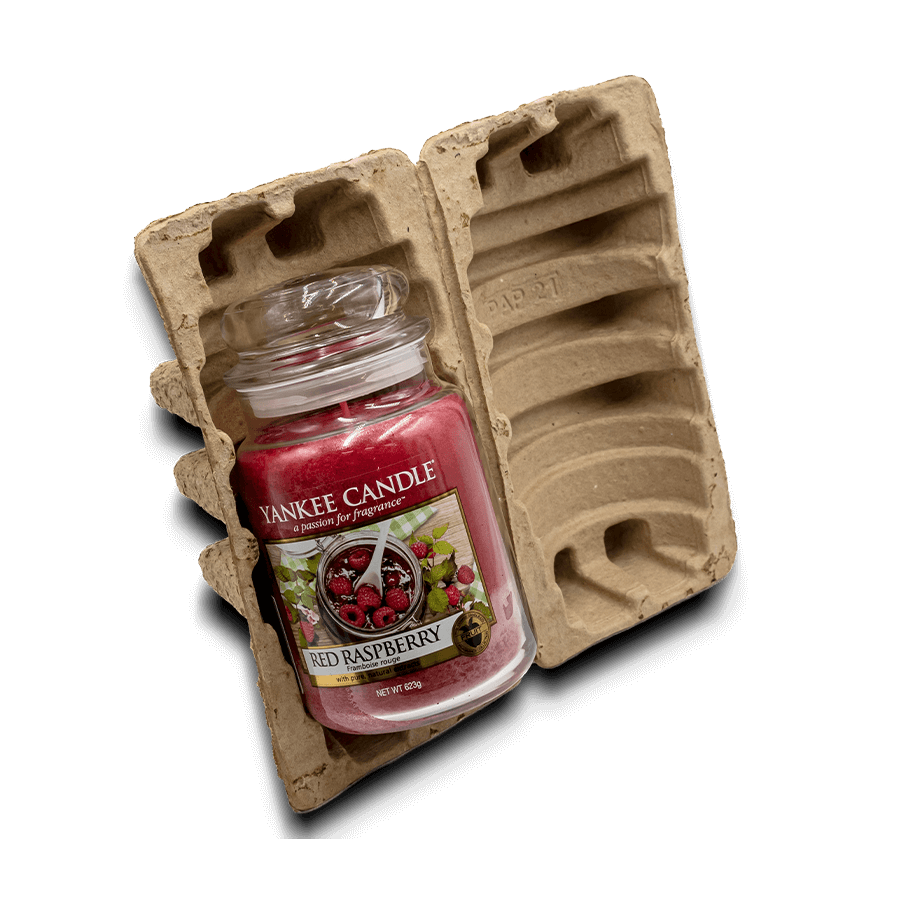
Moulded fibre packaging can support circular material use by transforming recovered paper and cardboard into new protective products. The fibre is mixed with water to create a pulp, formed into the required shape and dried or after-pressed according to the product’s performance and surface requirements.
This process creates three-dimensional packaging for applications including product protection, fresh produce, horticulture and medical care. Depending on the application, moulded fibre can provide cushioning, rigidity, separation, ventilation and efficient stacking.
After use, suitable clean fibre packaging may be collected through established paper and cardboard recycling systems, subject to its composition, coatings, contamination and local recycling infrastructure.
Paper fibres cannot be recycled indefinitely because they become shorter and lose strength during repeated processing. Carefully selected virgin fibre may therefore still be required for certain products or to maintain the quality of the wider paper-recycling system. Circularity should be understood as keeping materials in productive use for longer—not claiming that the same fibres can circulate forever.
Why Circularity Matters in the Packaging Industry
Packaging performs an essential role across almost every industry. It protects products, supports hygiene, enables efficient transportation and helps prevent product damage and waste.
However, packaging also requires raw materials and becomes a waste-management responsibility after use. Poorly designed packaging can use unnecessary material, combine materials that are difficult to separate or lack a practical recovery route.
A more circular approach seeks to balance product protection with efficient material use and realistic end-of-life recovery. For businesses, this may involve:
- Removing unnecessary packaging components
- Reducing packaging weight or volume
- Replacing materials where a technically suitable alternative exists
- Increasing verified recycled content
- Designing components for separation and recycling
- Improving transport and pallet efficiency
- Providing clear disposal instructions
Choosing moulded fibre does not automatically make an entire packaging system circular. Its contribution must be assessed alongside product protection, material composition, supply-chain performance and the recovery infrastructure available in the market where it will be used.
OMNI-PAC’s Approach to Recovered Fibre
OMNI-PAC GROUP regards recovered paper and cardboard as valuable manufacturing resources rather than simply as waste. Across our European operations, recovered fibres are transformed into practical moulded fibre packaging for a wide range of applications.
Material selection depends on the product’s performance, hygiene, appearance and regulatory requirements. Many OMNI-PAC products use recovered paper and cardboard, while carefully selected virgin fibres may be required for particular applications.
Our role within a more circular packaging system includes:
- Using recovered fibre materials where technically appropriate
- Designing packaging around product and supply-chain requirements
- Optimising material use without compromising necessary protection
- Manufacturing products that can support appropriate recovery routes
- Working with customers to assess packaging specifications and end-of-life requirements
- Continually improving production efficiency and material performance
Moulded fibre manufacturing is one part of a much larger system. Effective circularity also depends on responsible sourcing, efficient manufacturing, appropriate product use, clear disposal instructions, collection infrastructure and functioning recycling markets.
Designing Moulded Fibre Packaging for Its Full Lifecycle
Packaging cannot be considered only at the point of disposal. Decisions made during the design stage affect material use, manufacturing efficiency, transport performance, product protection and end-of-life recovery.
OMNI-PAC works with customers to consider:
- Product dimensions, weight and fragility
- Required cushioning and structural performance
- Hygiene and moisture requirements
- Nesting and pallet efficiency
- Manufacturing volumes
- Distribution conditions
- Applicable industry and regulatory requirements
- Material composition
- Intended recycling or disposal route
The priority must always be to provide the necessary level of protection. Packaging that fails and causes the product to be damaged can create considerably more material and economic waste than the packaging component itself.
Designing for a complete lifecycle therefore means finding an appropriate balance between protection, material efficiency, operational practicality and end-of-life management.
Innovation and Continuous Improvement at OMNI-PAC
Innovation plays an important role in improving the performance and resource efficiency of moulded fibre packaging. OMNI-PAC GROUP continues to develop its materials, product designs, tooling, manufacturing processes and after-pressing capabilities.
Areas of development may include:
- Evaluating recovered and alternative fibre sources
- Improving product strength while optimising material use
- Developing smoother after-pressed surfaces
- Enhancing nesting and transport efficiency
- Improving water and energy efficiency in manufacturing
- Developing fibre-based alternatives for selected plastic packaging components
- Assessing coatings and barriers against performance and recovery requirements
Any new packaging solution must be assessed against the requirements of its intended application. Environmental objectives need to be considered alongside quality, safety, regulatory compliance, manufacturability and commercial viability.
This evidence-led approach helps ensure that innovation delivers practical improvements rather than relying on broad sustainability claims.
Understanding Recycling, Compostability and Biodegradability
Recycling, compostability and biodegradability describe different end-of-life behaviours and should not be used interchangeably.
Recyclable means a product can be collected, sorted and processed into material for new products within an appropriate recycling system. Actual recyclability depends on composition, coatings, contamination, product format and local infrastructure.
Compostable means a product can break down under specified composting conditions. Industrially compostable packaging generally requires controlled facilities and should not be described as home compostable unless it has been tested and certified for that environment.
Biodegradable describes the ability of a material to break down through biological activity under particular conditions. It does not automatically tell a customer how quickly degradation will occur or which disposal route should be used.
For many clean, uncoated paper-based packaging products, recycling may be the more established recovery route. Composting can be relevant for selected products and applications, but only where the material is suitable and an appropriate collection and treatment system exists.
Customers should therefore follow the disposal guidance supplied for the specific OMNI-PAC product and the requirements of their local waste-management system.
What Should Businesses Consider When Choosing Packaging?
Businesses exploring more circular packaging should assess more than the material name alone. Important considerations include:
- Does the packaging protect the product adequately?
- Is the material composition clearly documented?
- Is the recycled-content percentage verified?
- Are coatings or additives used?
- Can the packaging be separated from other materials?
- Is the intended recovery route available in the destination market?
- Are disposal instructions clear?
- Has the packaging been tested under realistic distribution conditions?
- Does it support efficient packing, storage and transportation?
- Are environmental comparisons supported by evidence?
These questions help businesses distinguish between packaging that merely sounds sustainable and packaging that has been designed around practical performance and recovery requirements.
The Future of Circular Packaging
OMNI-PAC GROUP supports the long-term ambition to reduce avoidable packaging waste and keep valuable fibre resources in productive use.
Achieving this will require collaboration across the entire value chain. Packaging manufacturers, material suppliers, brands, retailers, consumers, waste collectors, recyclers and policymakers all influence whether a material is successfully recovered.
Future progress will depend on better packaging design, credible environmental data, consistent collection systems, investment in recycling infrastructure and clearer communication with customers and consumers.
Moulded fibre has an important role to play where it provides the necessary product performance and has an appropriate end-of-life route. However, circularity is not achieved by changing one material in isolation. It requires considered decisions across the complete packaging lifecycle.
OMNI-PAC will continue working with customers and industry partners to develop practical moulded fibre solutions that balance protection, manufacturing performance, material efficiency and responsible recovery.
If your business is reviewing its packaging materials, plastic use or end-of-life requirements, OMNI-PAC GROUP can help you assess whether moulded fibre is suitable for your application.
Tell our team about your product, current packaging, performance requirements, expected volumes and intended markets. We can help identify an established moulded fibre product or discuss the development of a custom packaging solution.
FAQs
What is circular economy packaging?
Circular economy packaging is designed to minimise unnecessary material use, protect products effectively and keep materials in use through reuse, recycling or another appropriate recovery route. It considers the complete packaging lifecycle rather than focusing only on disposal.
Is moulded fibre packaging part of the circular economy?
Moulded fibre packaging can support circular material use when it uses recovered or responsibly sourced fibres, performs its protective function and can enter an appropriate recovery system after use. Its contribution depends on the product’s composition and local infrastructure.
What materials does OMNI-PAC use?
OMNI-PAC GROUP uses recovered paper and cardboard across many moulded fibre products, alongside carefully selected virgin fibres where required by a product’s performance, hygiene or technical specification.
Can moulded fibre packaging be recycled?
Many clean moulded fibre products may be suitable for paper and cardboard recycling. Actual recyclability depends on the product’s composition, coatings, contamination and the collection and recycling systems available locally.
Is moulded fibre packaging compostable?
Selected products may be suitable for composting under specified conditions. Compostability should be confirmed using the relevant product specification, test evidence and local collection requirements
Does recycled packaging eliminate the need for virgin fibre?
No. Paper fibres become shorter and weaker after repeated recycling. Virgin fibre may still be needed for certain applications and to maintain the strength and quality of the wider fibre system.
Can OMNI-PAC develop custom circular packaging?
OMNI-PAC can develop custom moulded fibre packaging around a product’s dimensions, protection, presentation, manufacturing and end-of-life requirements.