Table of Contents
What should businesses consider when choosing sustainable packaging solutions?
The right sustainable packaging solution must protect the product, work efficiently within the supply chain and have an appropriate end-of-life route. Businesses should assess material composition, product protection, manufacturing compatibility, transport efficiency, recyclability, regulatory requirements and the availability of local collection systems before changing packaging.
How to Choose the Right Sustainable Packaging Solution
Businesses across the UK and Europe are reviewing how packaging is designed, manufactured, transported and recovered after use. Consumer expectations remain part of this change, but purchasing decisions are also being shaped by regulation, waste-management costs, corporate targets and supply-chain requirements.
Choosing a more sustainable packaging solution is not simply a matter of replacing plastic with paper or selecting a material described as environmentally friendly. The packaging must still protect the product, perform consistently, operate efficiently and have an appropriate end-of-life route.
A packaging change that leads to increased product damage, inefficient transportation or confusion over disposal may simply move the environmental impact elsewhere. The right solution therefore depends on the complete packaging system and the application in which it will be used.
What makes packaging more sustainable?
Packaging sustainability cannot be determined by a single material attribute. Recycled content, recyclability, renewable inputs and reduced material use may all be relevant, but they must be considered alongside product protection, manufacturing efficiency, transportation and end-of-life infrastructure.
A more informed assessment may consider:
- The amount and type of material used
- Recycled or responsibly sourced fibre content
- Product protection and damage prevention
- Packaging weight and dimensions
- Nesting and pallet efficiency
- Manufacturing energy requirements
- Coatings, barriers, inks and adhesives
- Reuse opportunities
- Recyclability or compostability evidence
- Local collection and processing infrastructure
- Regulatory and reporting requirements
The objective should be to improve the overall packaging system rather than relying on one broad environmental claim.
Start with the packaging function
Before selecting a material, define exactly what the packaging needs to do. Packaging may provide cushioning, separation, ventilation, moisture management, hygiene, product presentation or protection during transportation.
Businesses should establish:
- Product dimensions and weight
- Fragility and likely impact points
- Moisture and temperature exposure
- Hygiene or contamination requirements
- Required shelf life
- Packing-line processes
- Storage and distribution conditions
- Expected order volumes
- Customer presentation requirements
- Applicable industry standards
Once these requirements are understood, different materials and formats can be assessed against the same performance criteria.
Assess the material composition
Terms such as “paper-based”, “natural” and “fibre-based” do not provide enough information on their own. Businesses should understand the complete composition of the packaging, including recycled or virgin fibres, coatings, additives, adhesives and inks.
Recovered paper and cardboard can provide a valuable raw material for many moulded fibre applications. Selected virgin fibres may still be needed where particular hygiene, appearance, strength or technical performance is required.
Material specifications should be documented, and environmental claims should relate to the actual product being supplied.
Consider the complete supply chain
Packaging should be tested under realistic manufacturing, storage and distribution conditions. A material change can affect packing speed, pack dimensions, pallet configuration, warehouse space, transportation and product-damage rates.
Moulded fibre products can often be designed to nest together before use, potentially reducing the space required for storage and inbound transportation. However, the result depends on the product geometry and packing configuration.
A successful packaging solution should balance material use with reliable product protection and operational efficiency.
Understand the end-of-life route
A packaging material should not be described as recyclable or compostable without considering its full composition and the infrastructure available in the market where it will be discarded.
Many clean moulded fibre products may be suitable for appropriate paper and cardboard recycling systems. Actual recyclability depends on factors including:
- Fibre composition
- Coatings and barriers
- Adhesives and additional components
- Product contamination
- Packaging dimensions
- Local collection rules
- Sorting and processing infrastructure
Selected products may also meet defined compostability requirements, but this should be supported by product-specific test evidence and a suitable collection route.
Disposal instructions should be accurate, specific and easy for the end user to understand.
Review packaging regulation and reporting
Packaging choices can also affect compliance, reporting and cost. Under the UK’s extended producer responsibility system, obligated organisations may need to collect and report packaging data and pay fees based on the packaging they supply or import.
Recyclability is becoming increasingly important because disposal fees are being modulated according to packaging recyclability. This gives businesses an additional reason to understand packaging composition and intended recovery routes.
Plastic Packaging Tax may also apply to qualifying finished plastic packaging components containing less than 30% recycled plastic.
Regulation should not be treated as the only reason to improve packaging, but it is now an important part of commercial packaging decisions.
Where does moulded fibre fit?
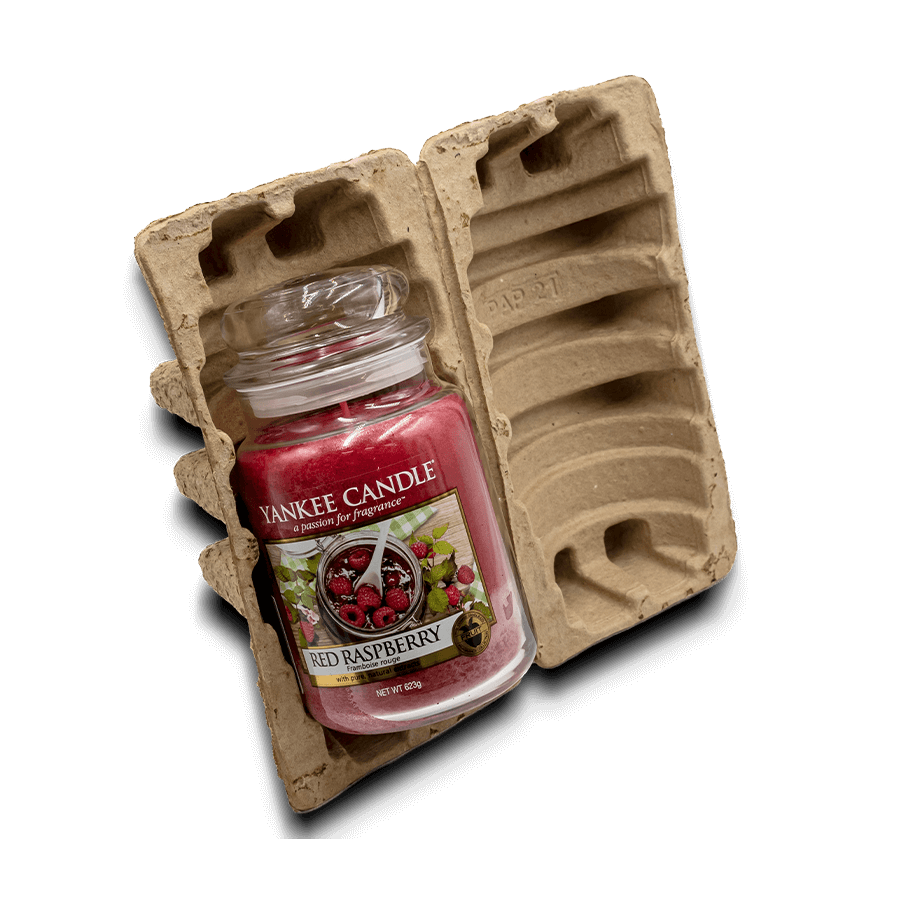
Moulded fibre can provide an effective packaging solution where products require three-dimensional protection, cushioning, separation, ventilation or presentation.
Potential applications include:
- Fresh produce trays
- Egg packaging
- Horticultural plant trays and pots
- Medical pulp products
- Protective inserts for consumer goods
- Industrial component packaging
- Bottle and container dividers
- Transit protection for fragile products
Product geometry can be developed around the application. Cavities, ribs, wall thickness and supporting structures can help hold and protect the product.
Different manufacturing techniques can also provide different finishes. Conventional moulding produces a functional textured surface, while after-pressing can create a smoother and more defined appearance.
Moulded fibre is not automatically suitable for every application. Requirements such as transparency, sterile barrier performance, extended moisture resistance or compatibility with existing high-speed equipment should be assessed during development.
How OMNI-PAC supports packaging development
OMNI-PAC GROUP designs and manufactures moulded fibre packaging for medical care, fresh produce, egg, horticultural and custom protective applications.
Our European network brings together manufacturing expertise across France, Germany and the United Kingdom. Working with customers, our teams can assess:
- Existing packaging and the reason for the proposed change
- Product dimensions and protection requirements
- Material composition
- Moisture, hygiene and barrier requirements
- Packing and manufacturing processes
- Storage and transportation conditions
- Expected production volumes
- Surface finish and presentation
- Intended end-of-life route
Depending on the project, OMNI-PAC can support product design, material selection, tooling, prototyping, testing and preparation for commercial production.
The objective is to develop packaging that combines reliable performance with efficient manufacturing and responsible material use.
Relevant OMNI-PAC facilities operate under recognised management and certification systems. These include BRCGS Packaging Materials certification and ISO 50001 energy-management certification where applicable. Certification scope and product requirements should be confirmed for each manufacturing location and application.
Recovered fibre in practice
OMNI-PAC uses recovered paper and cardboard as a raw material for many moulded fibre products, helping return suitable fibre materials to productive use. Product composition varies according to technical, hygiene and performance requirements.
FAQs
What is sustainable packaging?
Sustainable packaging aims to reduce environmental impact while continuing to protect the product and operate efficiently. It may involve reduced material use, recycled or renewable inputs, efficient transportation, reuse or an appropriate recycling or recovery route.
How do you choose the right sustainable packaging?
Begin by defining the packaging function, product-protection requirements and supply-chain conditions. Then compare materials using verified information about composition, performance, manufacturing, transportation and end-of-life options.
Is moulded fibre packaging recyclable?
Many clean moulded fibre products may be suitable for paper and cardboard recycling. Actual recyclability depends on the product composition, coatings, contamination and local recycling infrastructure.
Is moulded fibre packaging compostable?
Selected moulded fibre products may be compostable under defined conditions. This should be confirmed using product-specific test evidence and the availability of an appropriate collection and treatment system.
Can moulded fibre replace plastic packaging?
Moulded fibre can replace selected plastic components where it provides the necessary protection, hygiene and operational performance. Each application should be assessed and tested individually.
Is paper packaging always more sustainable than plastic?
Not necessarily. The answer depends on material use, product protection, manufacturing, transportation, reuse and end-of-life management. A packaging change should be assessed across the complete lifecycle.
Can OMNI-PAC develop custom sustainable packaging?
OMNI-PAC develops custom moulded fibre packaging around product dimensions, protection requirements, manufacturing processes, presentation and supply-chain conditions.
Find the Right Packaging Solution for Your Application
If your business is reviewing an existing packaging format, OMNI-PAC GROUP can help assess whether moulded fibre is technically and commercially suitable.
Tell us about your product, current packaging, protection requirements, packing process, expected volumes and intended markets. Our teams can discuss established product ranges or explore a custom moulded fibre solution.